This page is heavily under construction.
Just an fwi...
Ara'Novor Or'Haar Ibac

Science OfficerWork in Progress...
USS PHANTASY STAR
– The Temporal Experiment
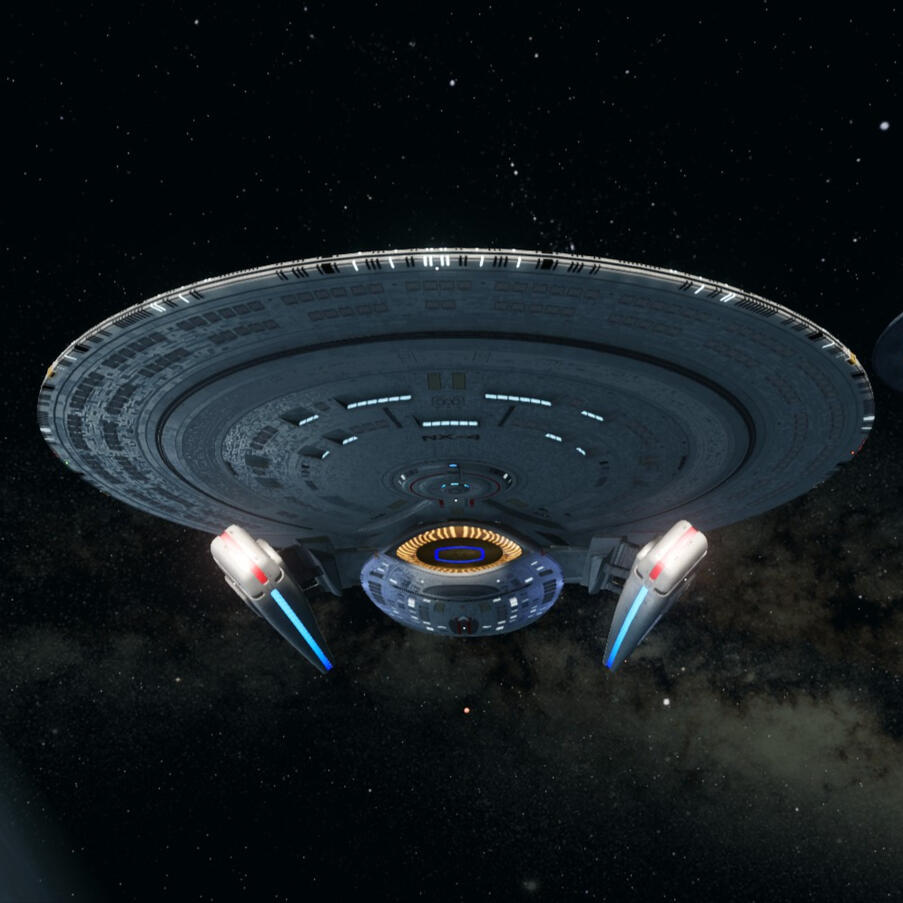
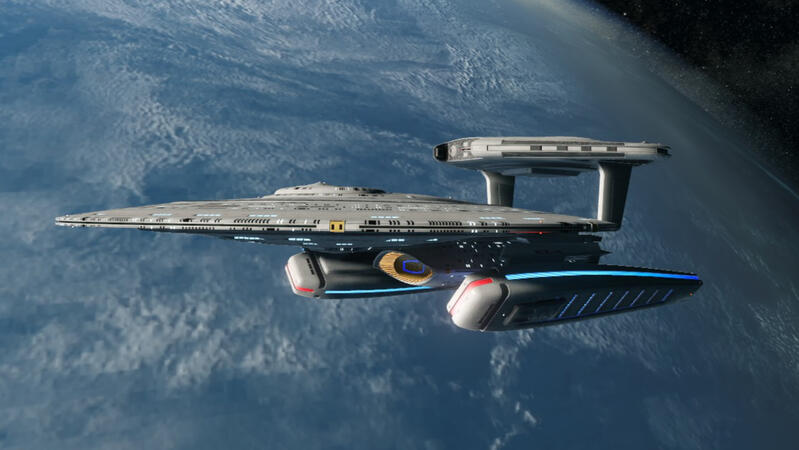
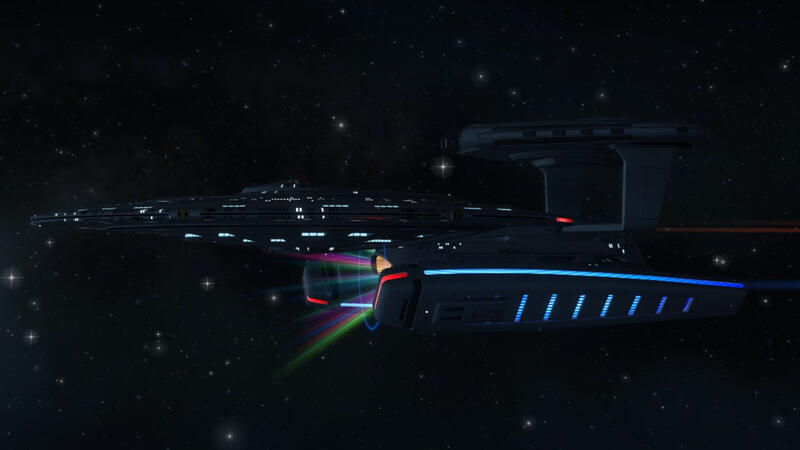
In the unending pursuit of scientific progress, Starfleet sought to push the boundaries of temporal mechanics beyond theoretical study.The result: the USS Phantasy Star, a heavily modified Nebula-class vessel, commissioned in 2366 as a testbed for experimental technologies. This was no ordinary research vessel—it was a starship designed to study, manipulate, and, if necessary, navigate the complexities of time itself.
At the core of its design lay an experimental deflector array, constructed using salvaged components from the original USS Enterprise NCC-1701—/a vessel that had, on multiple occasions, breached the temporal barrier. Further integrating Starfleet’s scattered knowledge of time travel, the Phantasy Star was also equipped with a computational core derived from the 1701, as well as components from the B’Rel-class Bird-of-Prey famously used in the 2286 Time Warp maneuver, programmed by Spock himself.
The USS Phantasy Star featured several radical departures from standard Nebula-class configurations:
The Mission Pod, a hallmark of Nebula-class versatility, was customized with an array of advanced sensor equipment, experimental torpedoes, and a Tholian web spinner—a technology acquired through diplomatic means after an enigmatic 2268 incident where two Federation captains outmaneuvered a technologically superior adversary. With this addition, the Phantasy Star could ensnare targets in an energy web, an ability previously exclusive to Tholian vessels.
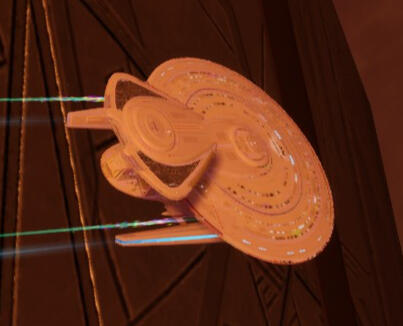
Warp Systems & Temporal Flight Capabilities
Originally intended to resemble a standard Nebula-class, the ship’s nacelle layout was drastically overhauled even before launch. The warp nacelles were coated in a tachyon-laced alloy, theoretically allowing for greater stability when engaging in temporal incursions. However, this modification came at a severe cost:
Warp field instability limited safe cruising speed to warp 6.3, with emergency speeds not recommended beyond warp 8.1. Warp 9 was only achievable when flanked by two support vessels in a formation that allowed the Phantasy Star to piggyback off their warp fields—an advantage utilized during the Dominion War.
Interestingly, following the 2370 'Force of Nature' subspace damage crisis, it was discovered that the Phantasy Star's angled nacelle design minimized subspace distortion, making it one of Starfleet’s most environmentally friendly ships of its era.
The ship’s armaments reflected its experimental nature:
Temporal Phaser Array – A highly unstable system capable of phasing through shields, hulls, and even organic matter. Though terrifying in theory, its unpredictability rendered it unreliable in combat.
Temporal Torpedoes – Designed on similar principles, these warheads proved more effective but suffered from erratic speeds, sometimes traveling sluggishly, other times streaking toward their target with shocking velocity.
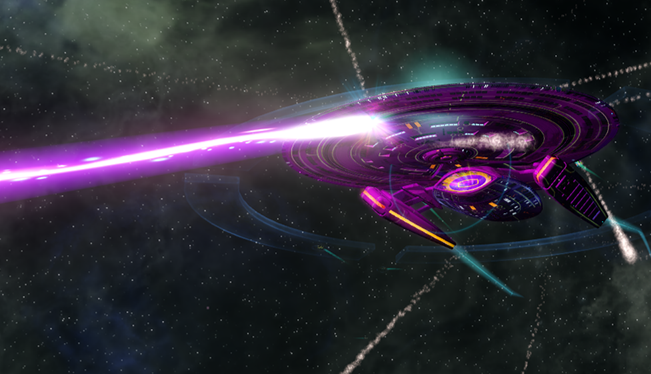

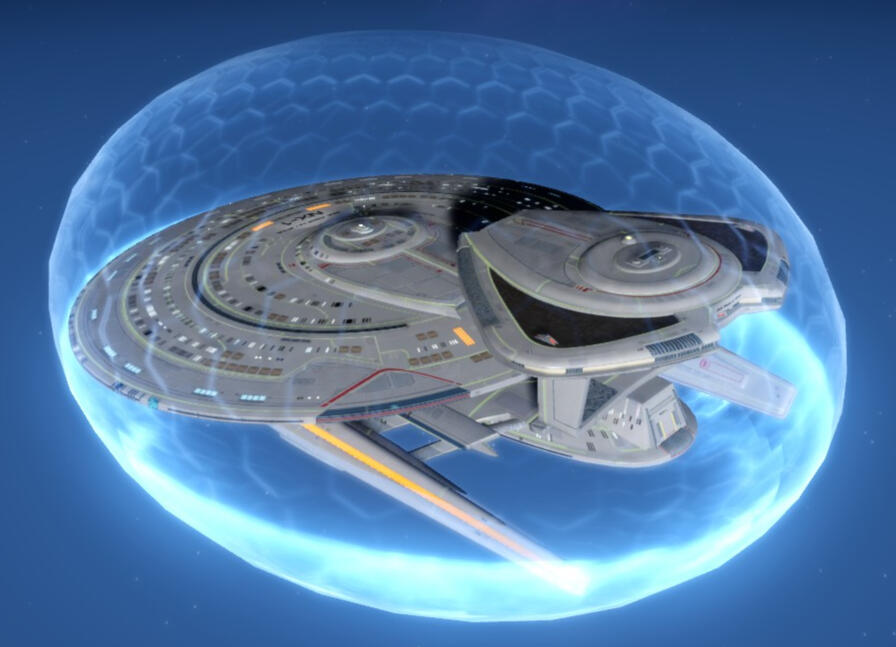
Defensively, the Phantasy Star was a paradox:
Exceptional shielding meant it could absorb tremendous punishment.
However, its hull aged rapidly, suffering visible stress fractures, rust, and warping within mere months. Starfleet engineers speculated that the ship's own modifications left it vulnerable to chroniton particle degradation, effectively forcing it to rely on its shields for survival.
Final Voyage – The Battle of Chin’tokaDespite its shortcomings, the USS Phantasy Star provided invaluable scientific data throughout its operational history. However, its fate was ultimately sealed in 2375 during the Battle of Chin’toka, where it played a crucial support role in reconnaissance and fleet coordination.Against the newly deployed Breen energy-dampening weapon, even the ship’s advanced shielding proved useless. The attack was devastating:* Both nacelles were destroyed, either sheared off or obliterated by direct hits.
* The mission pod was violently split in half, its remnants scattering into the void.
* A third of the hull was annihilated.Yet, against all odds, every crew member survived. Whether by engineering safeguards or sheer fortune, force fields held, bulkheads remained sealed, and life support endured. The crew suffered injuries ranging from severe trauma to minor bruises, but no lives were lost.The USS Phantasy Star was ultimately deemed a failed experiment, but its legacy persisted. The knowledge gained from its temporal research, warp field dynamics, and subspace interactions would shape future Federation projects—including advancements in coaxial warp drive and further refinement of temporal shielding technologies.Though lost in battle, the Phantasy Star remained a testament to Starfleet’s willingness to challenge the unknown—even when the answers lay beyond the veil of time itself.